Shenzhen Kosintec Co., Ltd
As a top-tier kiosk manufacturer, KosinTec adheres to a stringent production process to ensure every Food Ordering Kiosk meets commercial-grade standards for durability, performance, and reliability. This process seamlessly integrates high-quality components and rigorous testing.
Process: Finalizing mechanical and electrical schematics, especially for OEM/ODM orders. Procurement initiates sourcing based on the Bill of Materials (BOM), ensuring specific components like the RK3568 (Android) or i5 4200M (Windows) mainboards, and IPS A-Grade Panels are secured.
Detail: All incoming components undergo Incoming Quality Control (IQC), verifying compliance with specifications before being moved to the assembly floor.
Process: The physical structure is built to withstand heavy public use. Sheet Metal is cut, bent, and welded to form the kiosk body, while Aluminum Alloy is used for critical framing.
Detail: The exterior receives industrial Metal Spray Painting for durability. The Tempered Glass covers are treated with AG/AF (Anti-Glare/Anti-Fingerprint) coatings.
 |
Process: Precision assembly of the visual and touch interface. The G+G P-CAP touch sensor is carefully laminated to the AG/AF Tempered Glass cover. The FHD IPS Panel is then integrated into this unit.
Detail: This process ensures zero air gaps, maximizing touch accuracy and maintaining the unit’s quick response time (<= 6 ms).
Process: The chosen computing platform (Android 11 or Windows) and the Power Supply Unit (PSU) are secured inside the chassis.
Detail: The motherboard is mounted in a location optimized for thermal management, crucial for stable operation in commercial environments (0℃-55℃).
Process: All transactional modules are installed and meticulously wired. This is the most complex wiring stage.
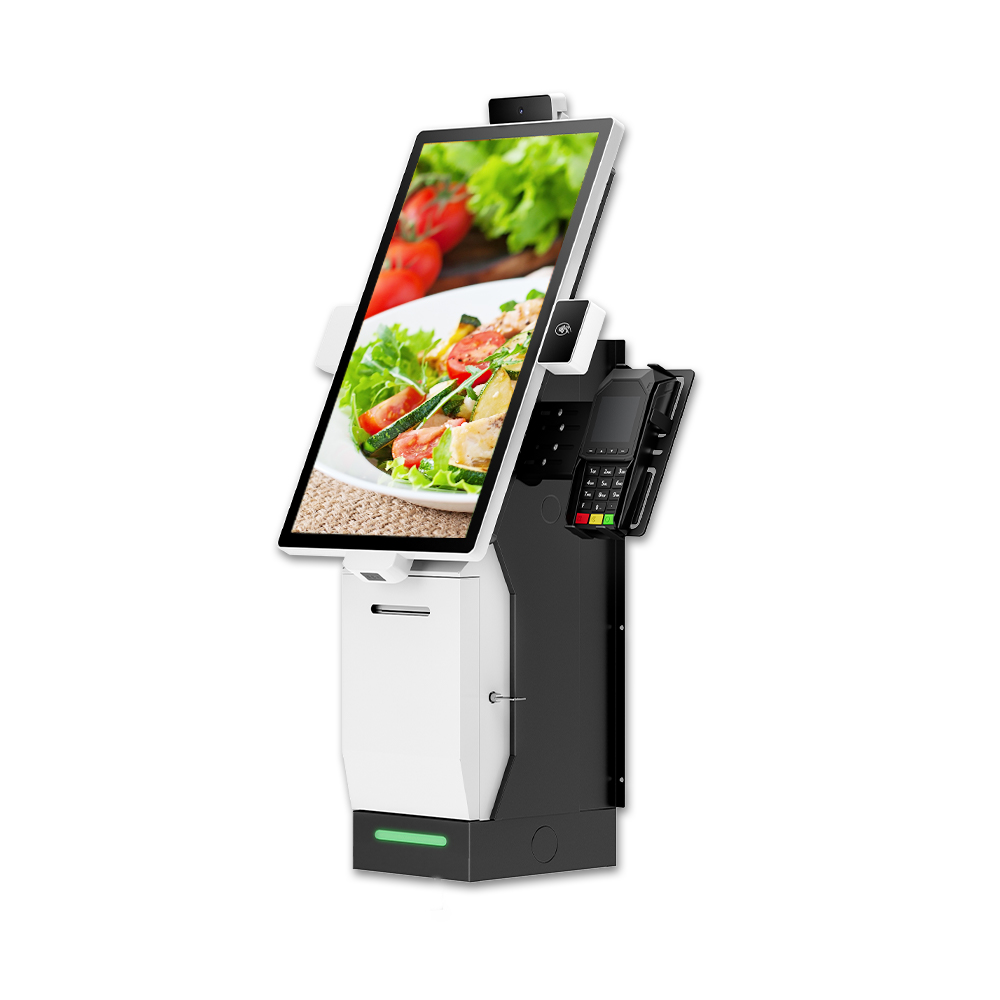
Detail: Integrating the high-speed Max 180 mm/s Thermal Printer, the NFC/Mifare Card Reader, the 1D/2D QR Scanner, and the optional 1080P Camera. All cables are managed and secured to prevent vibration damage during transport or use.
|
|
Process: The specified Operating System (OS) is flashed onto the mainboard. Custom firmware, Kiosk Mode software, and the necessary SDKs for communicating with the peripherals are installed.
Detail: Calibration of the touch sensor and confirmation that all peripherals (printer/scanner) are responding via the software interface.
Process: Every single Food Ordering Kiosk undergoes rigorous testing before packaging.
Detail: Includes a 24-48 hour Burn-in Test under simulated load to catch early component failure. Testing also confirms 10-point touch accuracy, thermal stability, and reliable network connectivity (WIFI/RJ45).
Process: Final cleaning, inspection, and protective packaging.
Detail: Verifying that all units are labeled with certified compliance marks (CE / FCC / RoHS) before being secured in robust packaging for safe shipment.
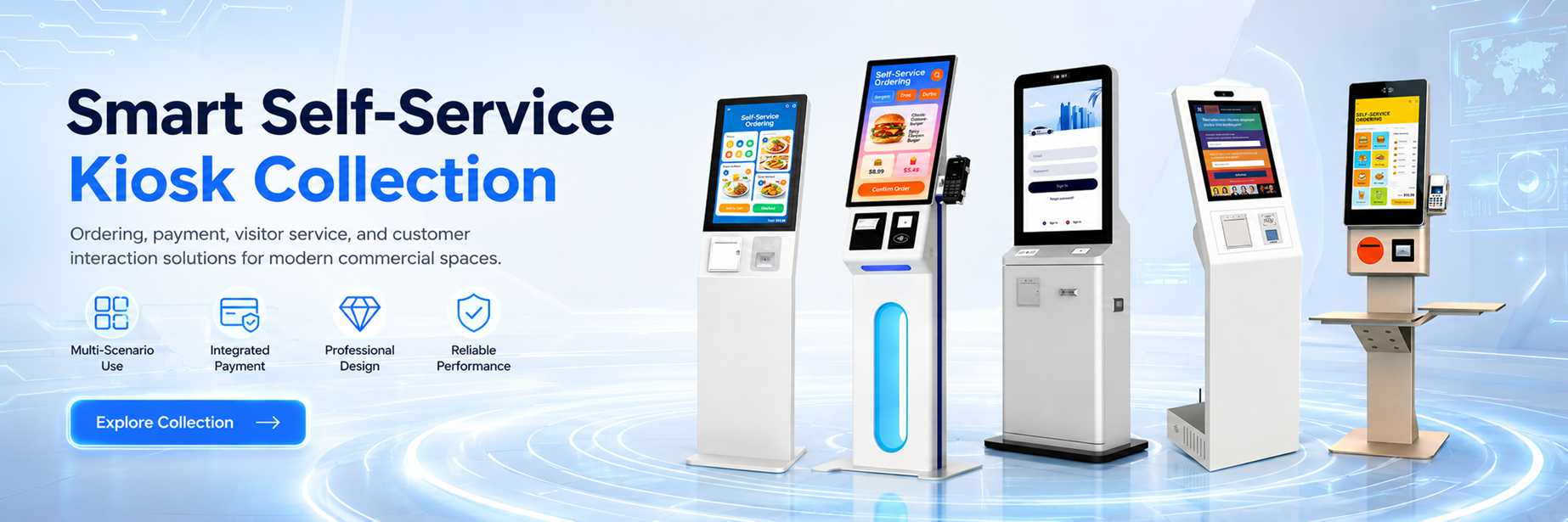
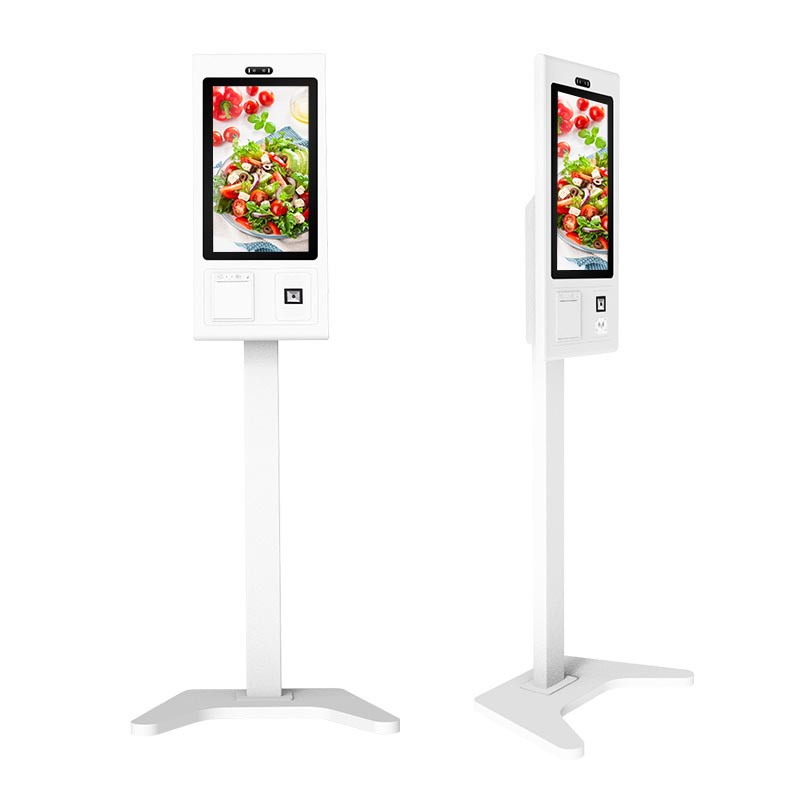
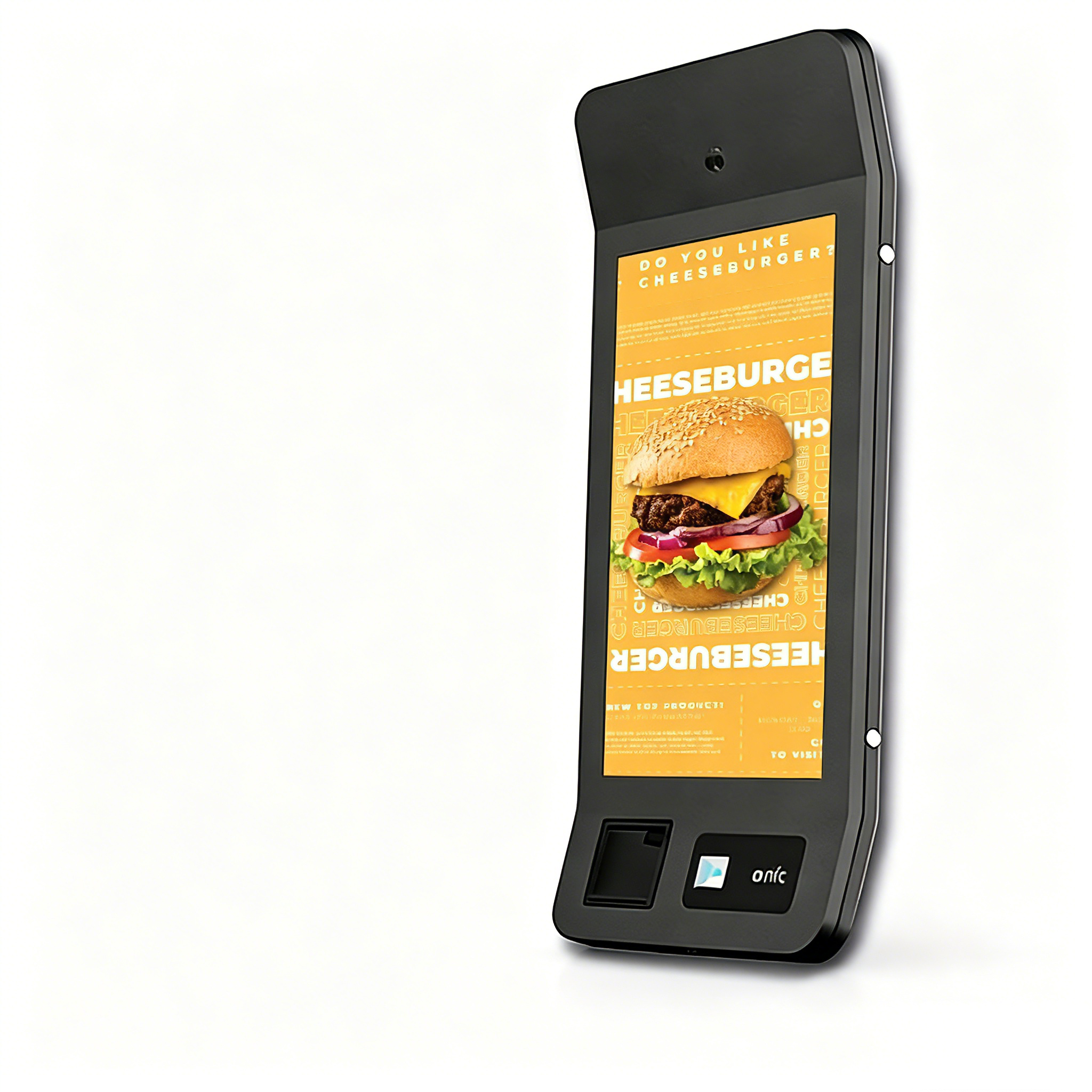
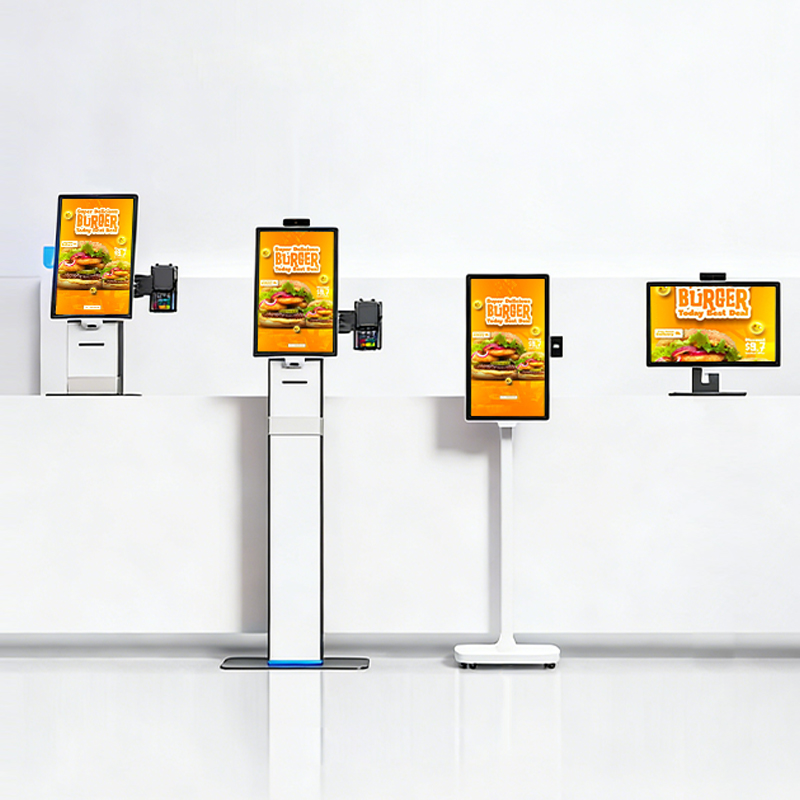
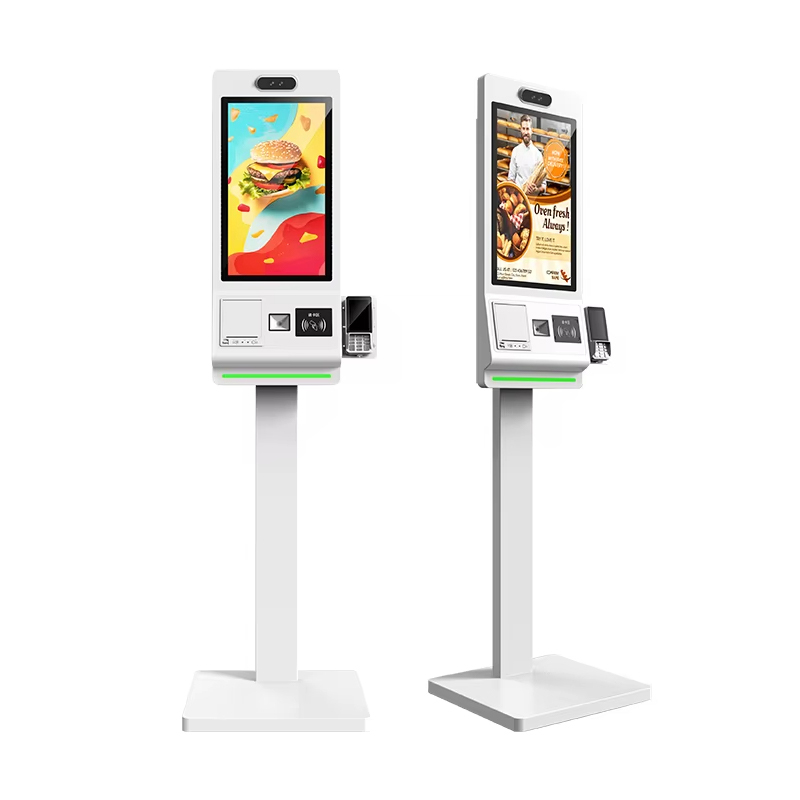
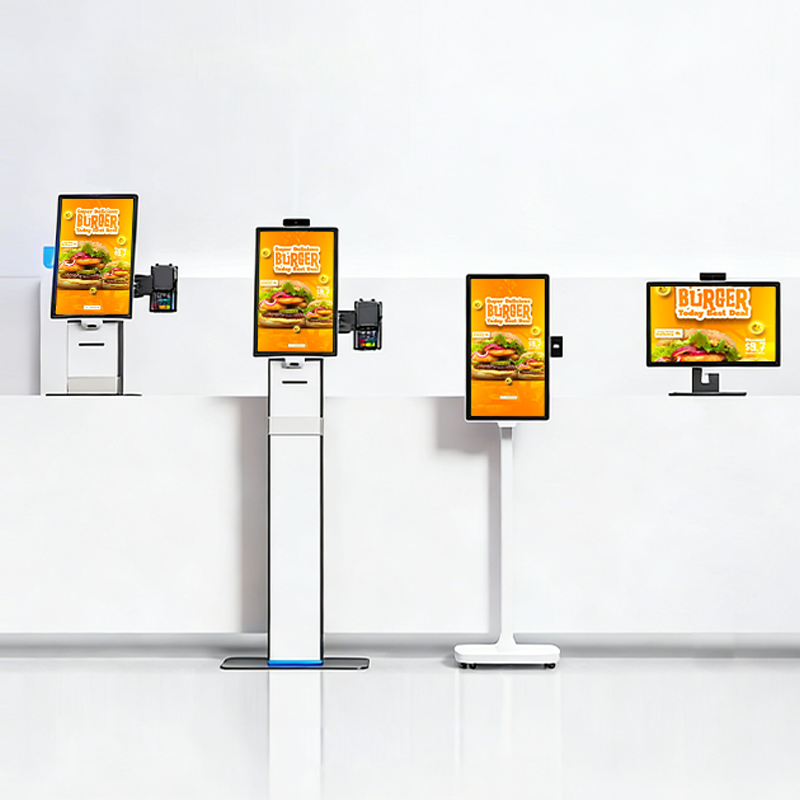
KosinTec offers a versatile product line of Self Food Ordering Kiosks designed to fit various space requirements, from compact countertops to high-visibility vertical installations.
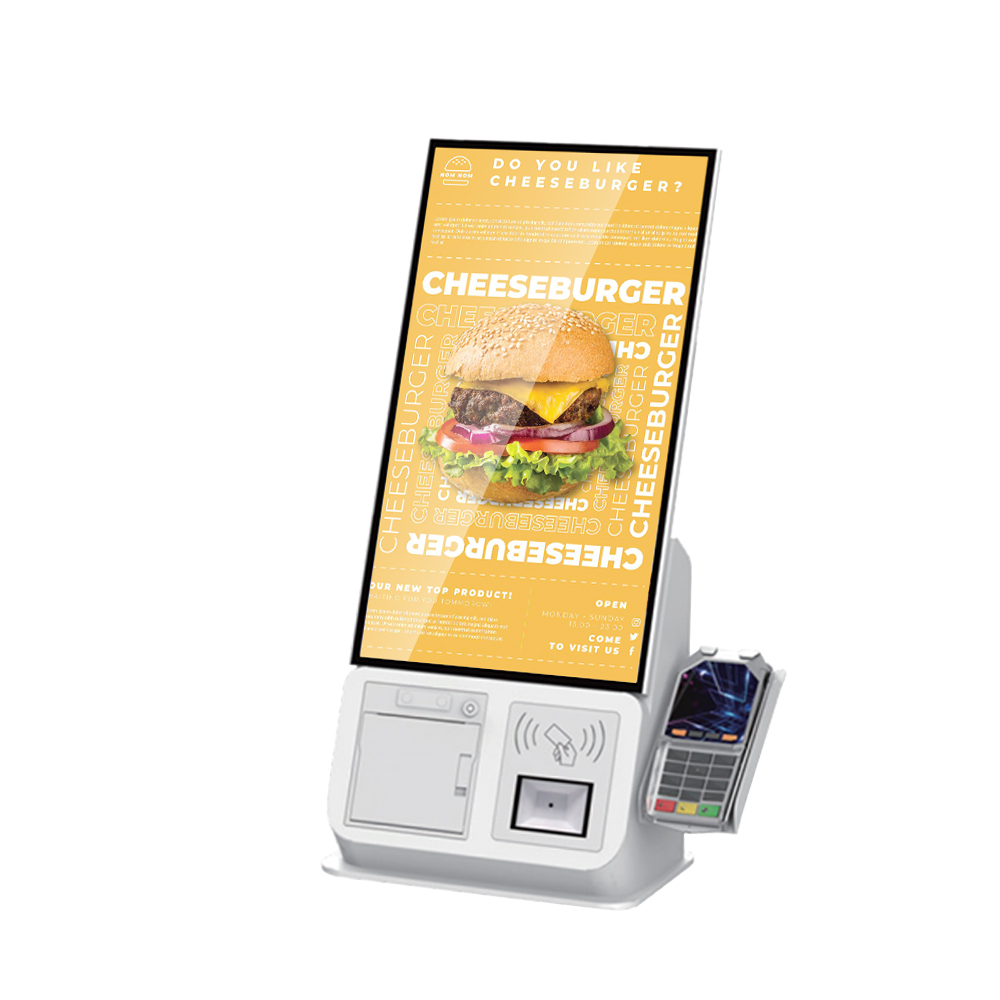
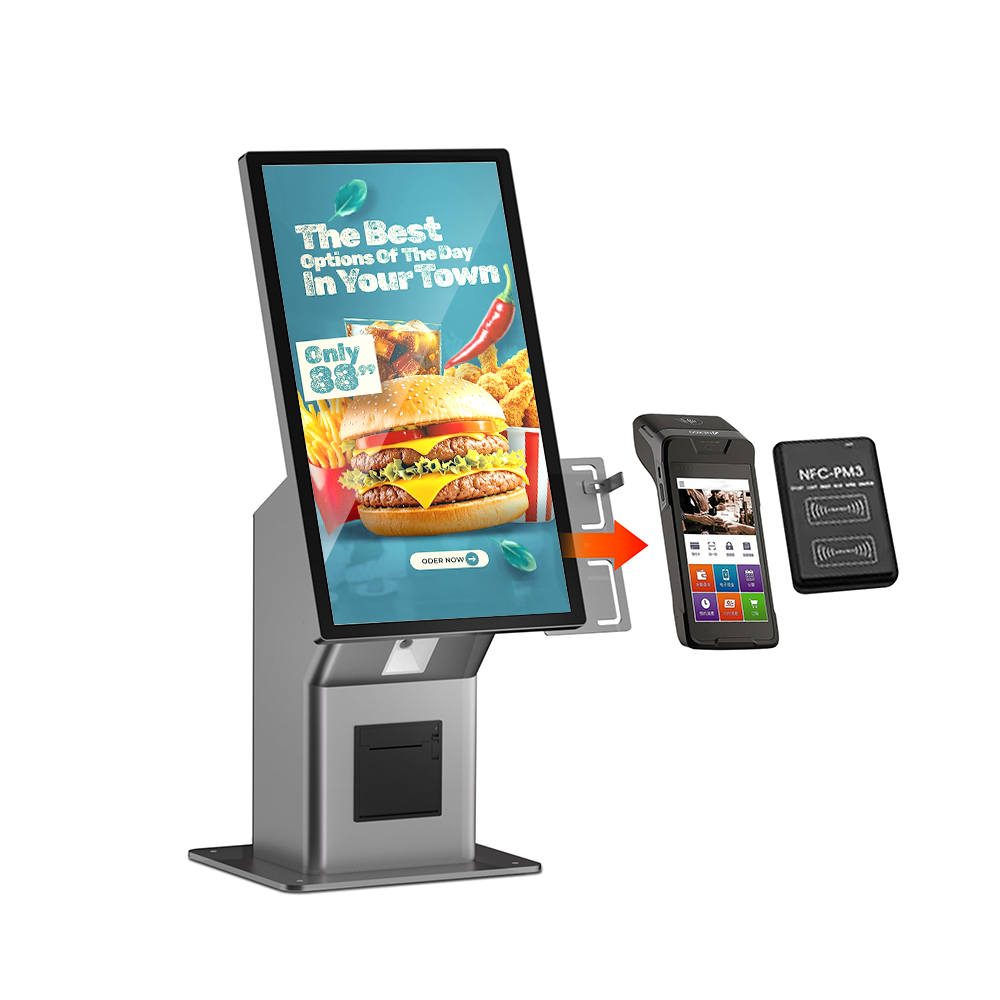
I. Desktop/Countertop KiosksThese models are ideal for areas with limited floor space, typically placed on existing counters or tables. Size Options:
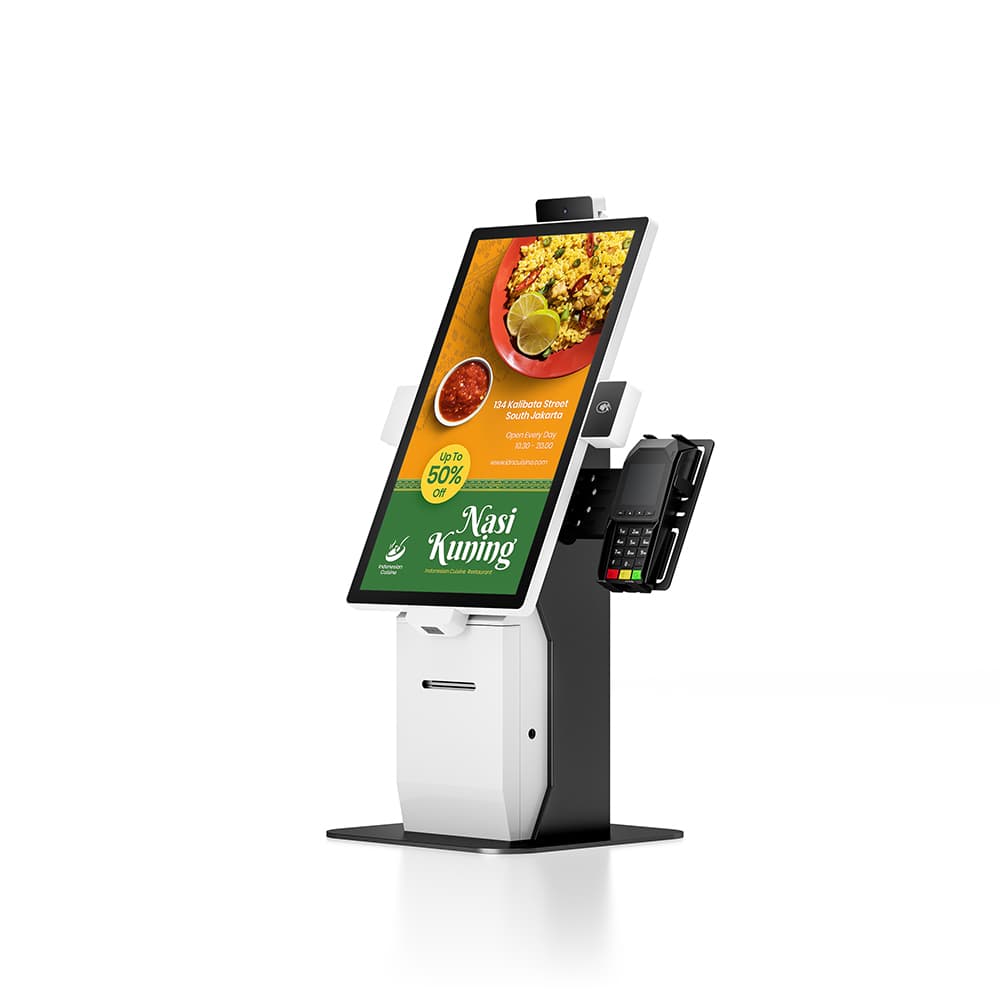
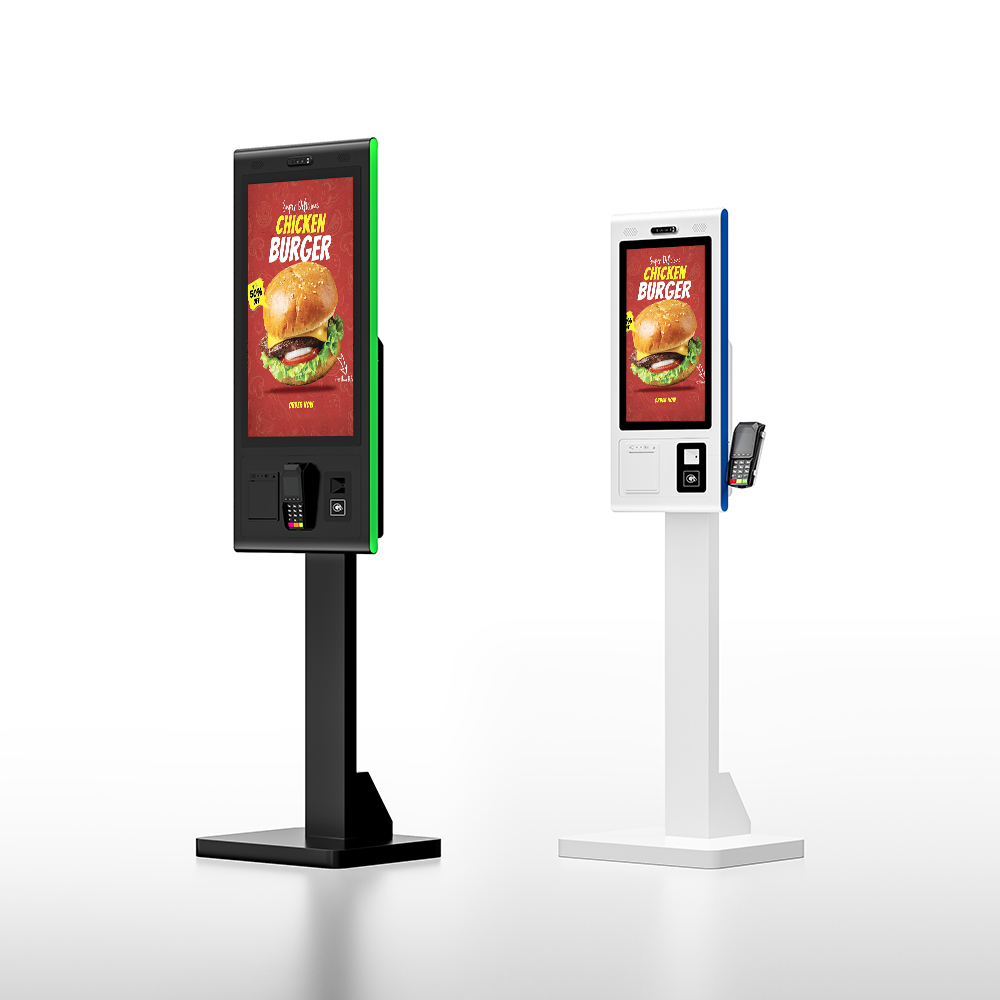
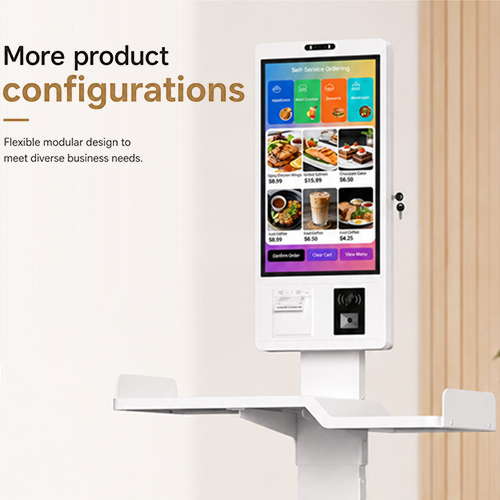
Best Use: Cafes, small retail service points, or as dedicated payment/order confirmation terminals next to a main counter. | II. Vertical (Floor-Standing) and Wall-Mounted KiosksThese models are used for high-traffic zones where visibility and dedicated interaction space are key. They feature robust Sheet Metal structures and Aluminum Alloy frames. | Compact/Mid-Size Options:
Large Format Options:
Best Use: QSR entrance areas, retail lobbies, movie theaters, or high-volume food courts where floor space is less restrictive. |
KosinTec ensures maximum performance and minimal TCO through commercial-grade components built for continuous restaurant use:
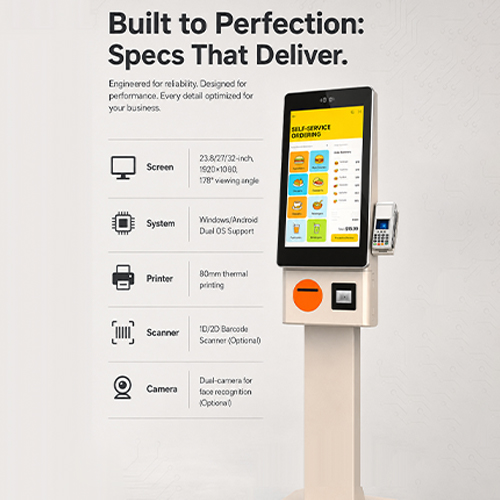
Display & Touch: IPS A-Grade Panel (FHD resolution, 300 cd/m2 brightness) with G+G P-CAP 10-point touch (response <= 6 ms).
Processing Unit: Flexible options: High-efficiency Android 11 (RK3568) or powerful Windows 10/11 (i5 4200M) configurations.
Peripherals: Integrated Max 180 mm/s Thermal Printer, NFC/Mifare card reader, and high-accuracy 1D/2D QR code scanner.
Construction: Robust Aluminum Alloy frame and Sheet Metal body with AG/AF Tempered Glass surface treatment for longevity.
Sizes & Types: Available as Desktop Kiosks (up to 32") and Vertical/Wall-Mounted Kiosks (from 15.6" to 32").
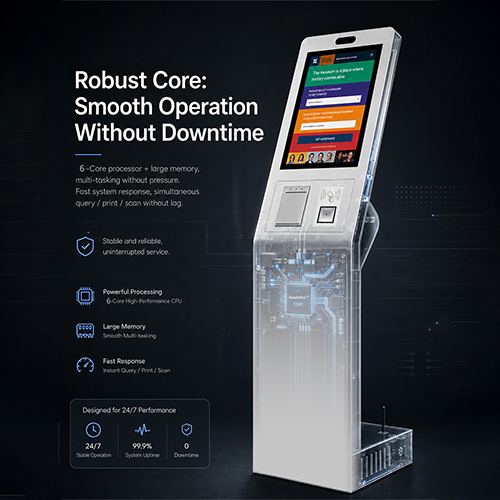
Our platform is designed for stability and seamless integration with existing restaurant systems:
OS Choice: Customer's choice of certified Android or Windows operating systems.
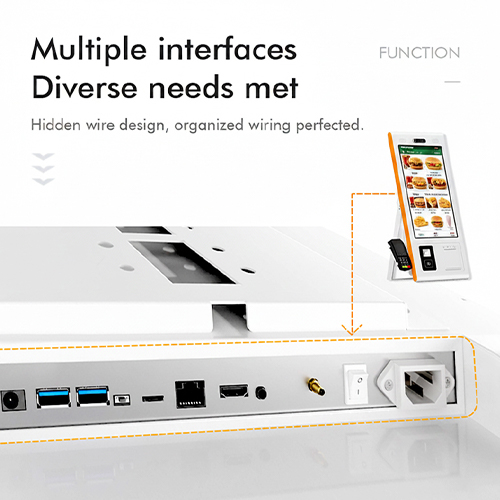
Connectivity: Stable dual-band WIFI-2.4G/5G and dedicated RJ45 interfaces.
Integration Support: Provision of comprehensive SDK documentation and API interfaces for quick connection to third-party POS and kitchen systems.
Security & Compliance: System supports Kiosk Lockdown Mode and complies with international certifications (CE / FCC / RoHS).
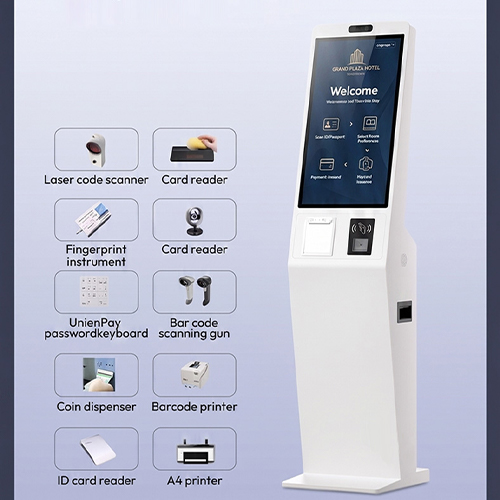
Placement: Choose a visible, high-traffic location (countertop for Desktop models; wall-mount for Vertical models using standard VESA).
Power & Network: Connect the power supply and preferred network connection (RJ45 is recommended for stability).
Software Setup: Install and configure the restaurant's ordering application and link it to the integrated peripherals (printer/scanner/payment modules) via the provided SDKs.
Start: Customer initiates the order via the P-CAP touchscreen.
Order & Customize: Selects items and manages customizations on the FHD display.
Payment: Chooses payment method (NFC/Card or QR Code) and completes the transaction using the integrated modules.
Completion: The Max 180 mm/s printer issues the receipt/ticket immediately.
Reduce Queuing: Deploy multiple units (especially during peak hours) to maximize transaction throughput, leveraging the fast 6 ms touch response.
Increase AOV (Average Order Value): Utilize the digital interface for aggressive, error-free upselling prompts, a feature easily managed through the Android/Windows application software.
Minimize Downtime: Rely on the durable IPS A-Grade hardware and remote access capabilities to ensure the kiosk runs continuously, mitigating lost sales from human error or equipment failure.
Reallocate Staff: Free up counter staff from routine order-taking to focus on food preparation, delivery, and customer service, directly improving labor efficiency and ROI.
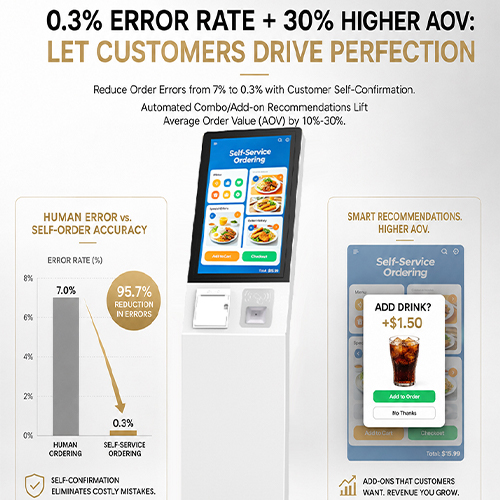
Are you asking yourself: "Will this food order machine last more than a year?" or "How complex is the integration?" B2B buyers—from local entrepreneurs to global chains—share common anxieties when acquiring a Food Ordering Kiosk. Their concerns center on balancing upfront investment with long-term reliability and seamless system integration. KosinTec offers precise, expert solutions to alleviate these procurement fears.
The primary barrier to adoption is fear of poor ROI due to hidden costs and premature failure.
Small business owners often hesitate due to the initial capital outlay, questioning if the cost justifies replacing manual labor.
KosinTec Solution (TCO Assurance): We eliminate high TCO risk through quality components and factory-direct pricing. By choosing a cost-effective Android RK3568 configuration, businesses realize an ROI within months through labor savings. Our use of IPS A-Grade panels guarantees a longer operational life, minimizing future repair costs compared to cheaper alternatives.
Large chains focus on TCO across hundreds of units. A failure rate exceeding 1% per year can result in significant maintenance budgets.
KosinTec Solution (Durability Proof): Our food ordering kiosks are built with industrial-grade Sheet Metal and Aluminum Alloy frames, not plastic. We provide assurance through pre-certified quality checks and a robust assembly process, reducing the lifecycle cost of the Food Ordering Kiosk fleet.
A food order kiosk is useless if it cannot communicate with the existing restaurant ecosystem (POS, kitchen systems, payment gateways).
Buyers need certainty that the kiosk hardware will "talk" to their specific POS software. Dealing with complex, closed systems is a major headache.
KosinTec Solution (Open Flexibility): We maximize compatibility by offering platform choice: Windows (i5 4200M) for heavy legacy POS systems, or Android 11 for modern cloud-based solutions. Crucially, we provide detailed SDK documentation to ensure rapid, error-free integration of the Max 180 mm/s printer and NFC/Mifare readers.
For large clients ordering thousands of units, ensuring every Food Ordering Kiosk performs identically across different global locations is essential.
KosinTec Solution (Manufacturing Consistency): Our production strictly adheres to ISO 9001 standards and passes CE / FCC / RoHS compliance tests. This rigor guarantees that the performance characteristics—from the G+G P-CAP touch accuracy to the WIFI-5G stability—are identical across all units, simplifying mass rollout and remote management.
A slow order kiosk negates the investment. Buyers worry that transaction speed will be bottlenecked by slow touch response or payment processing.
KosinTec Solution (Transaction Velocity): We eliminate speed concerns. The sub-6ms touch response of our P-CAP technology guarantees instantaneous interaction. Furthermore, the integrated high-speed thermal printer (Max 180 mm/s) and instant 1D/2D QR scanning ensure the payment and receipt process is completed in seconds, maintaining high customer throughput.
Deployment in public areas exposes hardware to spills, heavy touch, and temperature fluctuations.
KosinTec Solution (Physical Resilience): Our food order kiosks are shielded by AG/AF Tempered Glass to resist scratches and accidental damage. The robust internal components are rated for stable operation across a wide commercial temperature range (0°C - 55°C), meaning the Food Ordering Kiosk remains reliable whether placed near a hot kitchen or in a sunlit dining area.
 |
Choosing the right Food Ordering Kiosk requires balancing technical specifications, budget, and long-term operational needs. Follow this guide to ensure maximum ROI and minimal TCO (Total Cost of Ownership).
A high-quality Food Ordering Kiosk reduces maintenance and maximizes uptime. Always look beyond the price tag to the core components:
Display Quality: Insist on commercial-grade IPS A-Grade Panels (FHD resolution, 300 cd/m2 brightness). Consumer screens degrade quickly under continuous use.
Touch Technology: Verify the use of G+G Projected Capacitive (P-CAP) touch with a high degree of sensitivity (10-point) and low latency (response time <= 6 ms). This prevents double-ordering errors and customer frustration.
Peripherals Performance: Ensure the transactional speed is guaranteed. The printer should be a high-speed thermal type (Max 180 mm/s), and the payment module must support instant NFC/Mifare and 1D/2D QR code scanning.
Your configuration choice directly impacts your budget and ROI timeline.
| Consideration | Budget Impact | KosinTec Buying Advice |
| CPU / OS Choice | Windows (i5/i7) is significantly costlier than Android (RK3568) due to hardware and licensing. | Choose Android for simple menus and budget control; choose Windows for complex, proprietary POS integration. |
| Traffic vs. Quantity | Investing in multiple units is initially costly but maximizes ROI. | Analyze peak foot traffic: Better to have 3 x 21.5-inch kiosks operating than 1 x 32-inch kiosk creating a bottleneck. |
| TCO Focus | Upfront cost is secondary to maintenance cost. | Focus on manufacturer quality guarantees and the reliability of key parts (e.g., printer mechanism) to ensure rapid ROI within the first 6-12 months. |
The physical environment dictates the necessary specifications and durability features of the Food Ordering Kiosk.
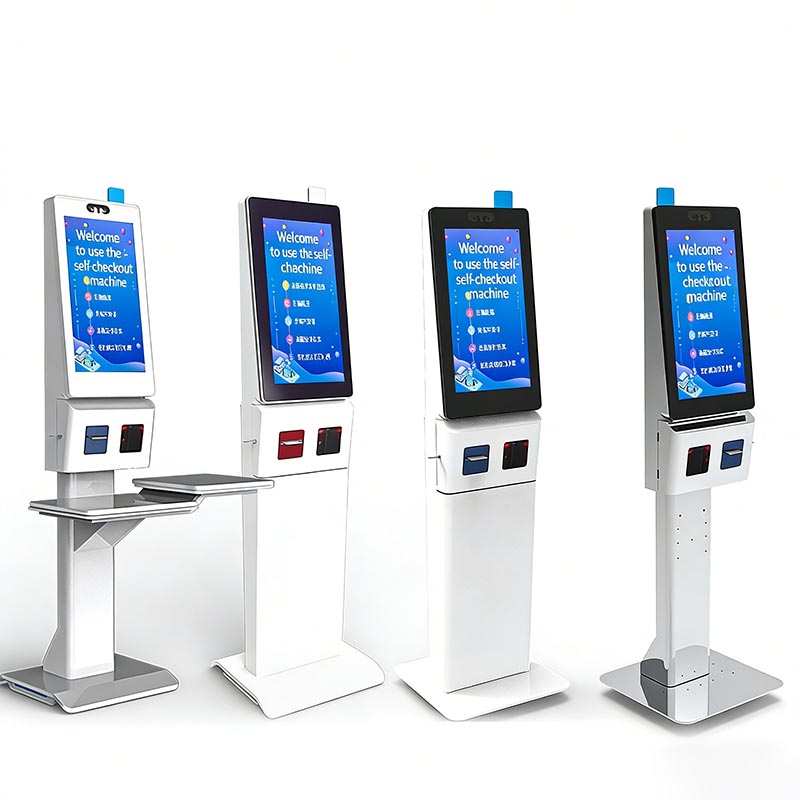
Foot Traffic Demand: High-traffic areas (like QSRs) require Vertical/Floor-Standing Kiosks (27 inch or 32 inch) for maximum visibility and dedicated space. Low-traffic areas (like cafes) benefit from space-saving Desktop Kiosks (21.5 inch) with stable bases.
Environmental Temperature: Verify the kiosk's operational range. Commercial units should be rated for stable performance from 0℃ to 55℃ to withstand internal heat buildup and proximity to kitchen equipment.
Durability: In public environments, opt for construction featuring a robust Aluminum Alloy frame and Sheet Metal body protected by AG/AF Tempered Glass to resist vandalism and frequent cleaning.
The manufacturer is your long-term partner. Vetting their standards is non-negotiable.
Compliance Policy (The Must-Haves): Insist on verifiable compliance certificates for CE / FCC / RoHS. This ensures the Food Ordering Kiosk meets international safety and environmental standards, preventing customs issues and legal risks.
Integration Support: The manufacturer must provide extensive SDK documentation and flexible support to ensure their hardware integrates seamlessly with your existing POS software.
Pricing Structure: Factory-Direct pricing is crucial for optimizing the budget. Partnering with a manufacturer like KosinTec eliminates reseller markups, offering the most competitive Total Cost of Ownership.
What did our happy clients say?
We deployed the 32-inch vertical Food Ordering Kiosk in our busy QSR. The Max 180 mm/s printer output is crucial during the lunch rush, drastically cutting wait times. The G+G P-CAP 10-point touch response is flawless. KosinTec is definitely a top Food Ordering Kiosk manufacturer.
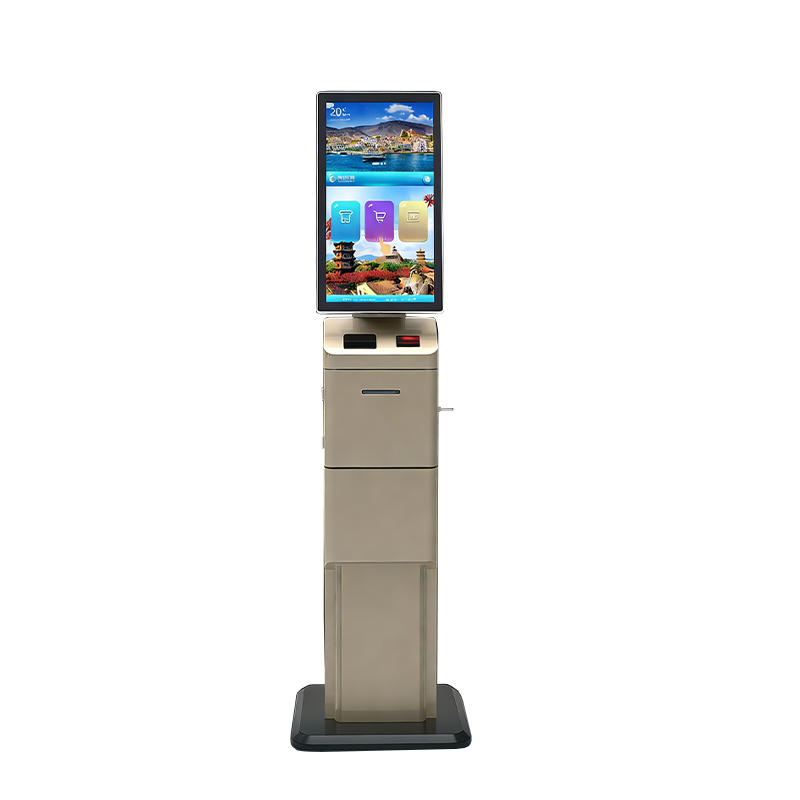
Our small cafe chose the 21.5-inch desktop Food Ordering Kiosk. The Android RK3568 system is reliable and integrates smoothly with our cloud POS. The low TCO and high-quality construction are impressive. We highly recommend this reliable Food Ordering Kiosk manufacturer.
We installed the wall-mounted 27-inch Food Ordering Kiosk in a high-traffic food court. The AG/AF Tempered Glass holds up perfectly to constant use. Integration of NFC/Mifare payment was instantaneous and trouble-free. KosinTec provides the best Food Ordering Kiosk solutions.
Our pickup window uses the Windows i5 4200M Food Ordering Kiosk. The IPS A-Grade FHD screen is perfectly visible even in bright sunlight. The stable WIFI-5G ensures zero connection drops. A satisfied customer of this top-tier Food Ordering Kiosk manufacturer.