
Hot Products
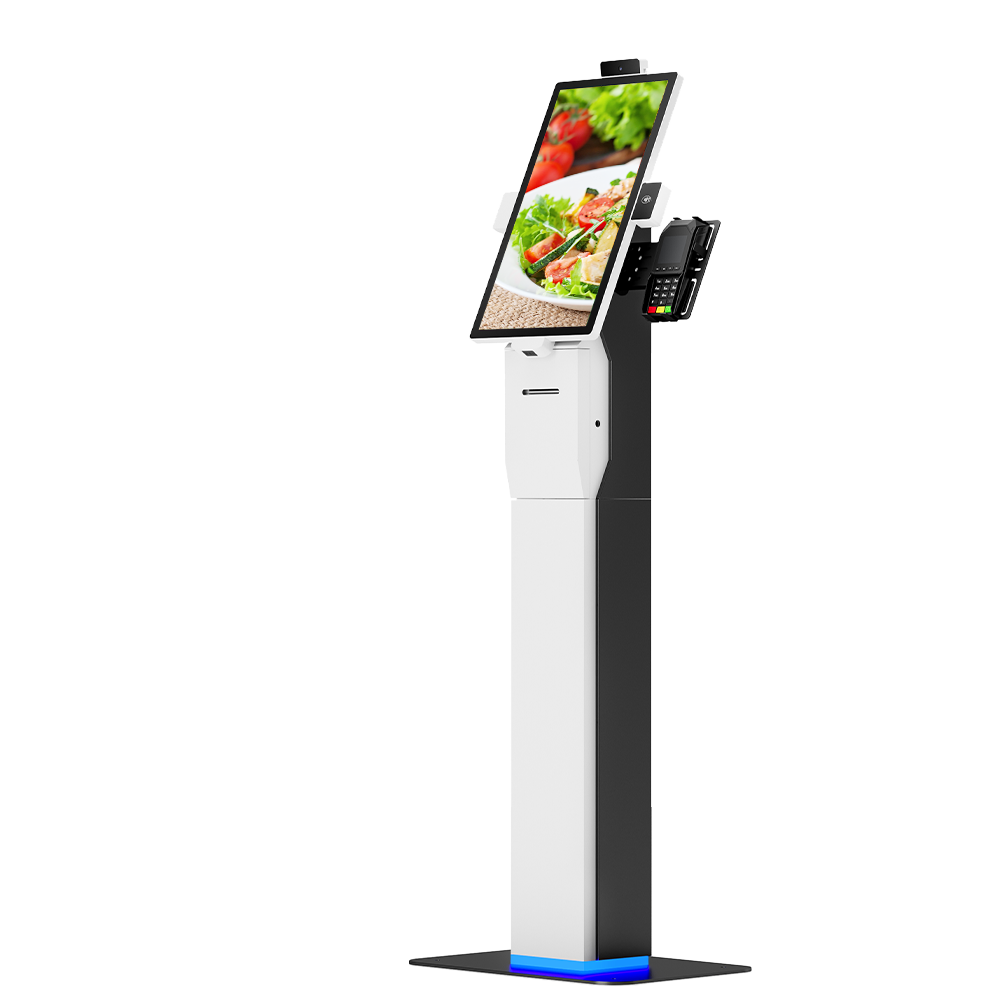
Branded Custom Self Order Kiosk With SDK & Pre-Install Service
This customizable self-service kiosk supports full brand customization including logo printing, custom colors and structural shape modification. It offers FHD or optional 4K high-definition display, configurable Intel i3/i5/i7 CPU with maximum 16GB RAM for smooth running of complex programs. Equipped with complete SDK for personalized UI development and system docking. We provide professional pre-installation, software configuration and full testing service, so the kiosk can be put into use directly after delivery.
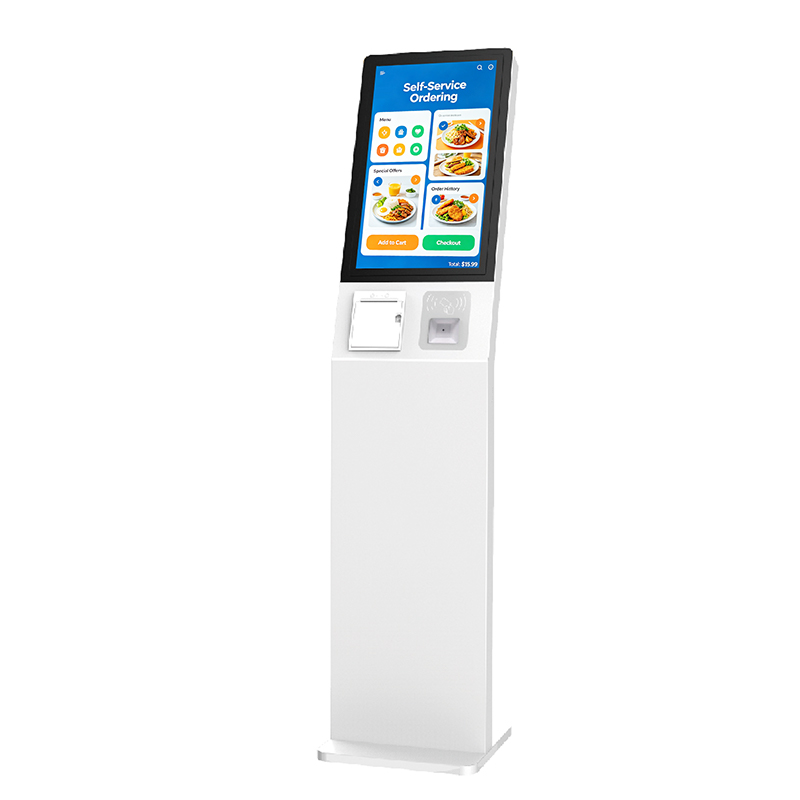
Fast Restaurant Ordering Desktop Touch Kiosk
Accelerate Service & Reduce QueuesEnables multiple customers to order simultaneously, drastically cuttingwait times during peak hours and improving overall cust
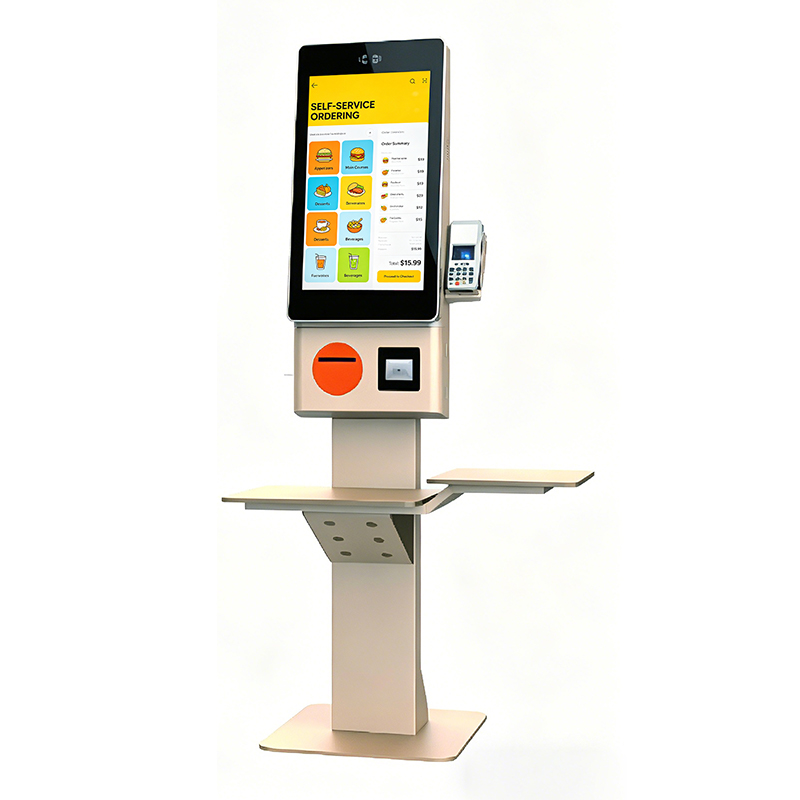
Self-Service-Ordering-Touch-All-in-One Kiosk
Secure & Versatile Payment HubIntegrates seamlessly with various payment gateways, supporting NFC,QR code, credit card readers, and mobile wallets for a complet
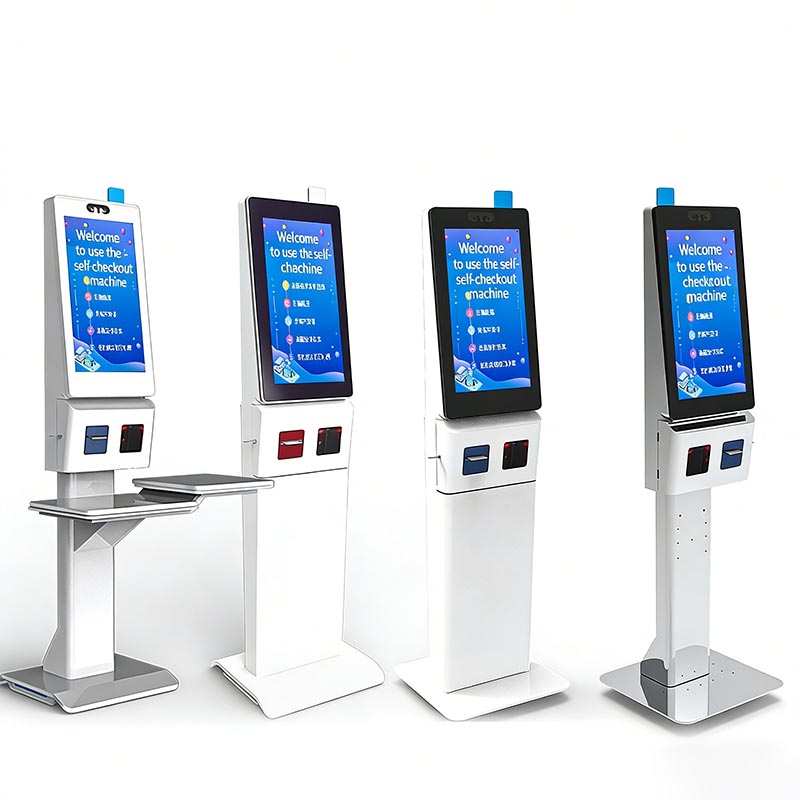
Self-Service Checkout Kiosk: HD Capacitive Screen, Multi-Payment (Face/QR) & Cloud Data Sync for Retail/F&B Operational Efficiency
Product IntroductionThis self-service checkout kiosk features an HD capacitive touch screen, integrated face/QR payment, and cloud data sharing. It supports sel
- Request A Quote
Unmanned Transactions The Ultimate Guide to Kiosk Payment Systems
Publish time:2025-12-27 21:11:01
Detailed Product Description
Executive Summary: The Shift to Autonomous Commerce
In the post-pandemic retail landscape, the Kiosk Payment System has evolved from a luxury to a fundamental business necessity. Whether it is a self-ordering kiosk in a QSR, a ticketing terminal in a transit hub, or a self-service check-out in a retail store, the payment module is the "moment of truth." For B2B buyers and kiosk operators, understanding the architecture of payment integration is the key to reducing friction, ensuring security, and maximizing ROI.
The Core Components of Kiosk Payment Hardware
A robust kiosk payment system is an orchestration of several specialized hardware components designed for high-frequency, public use.
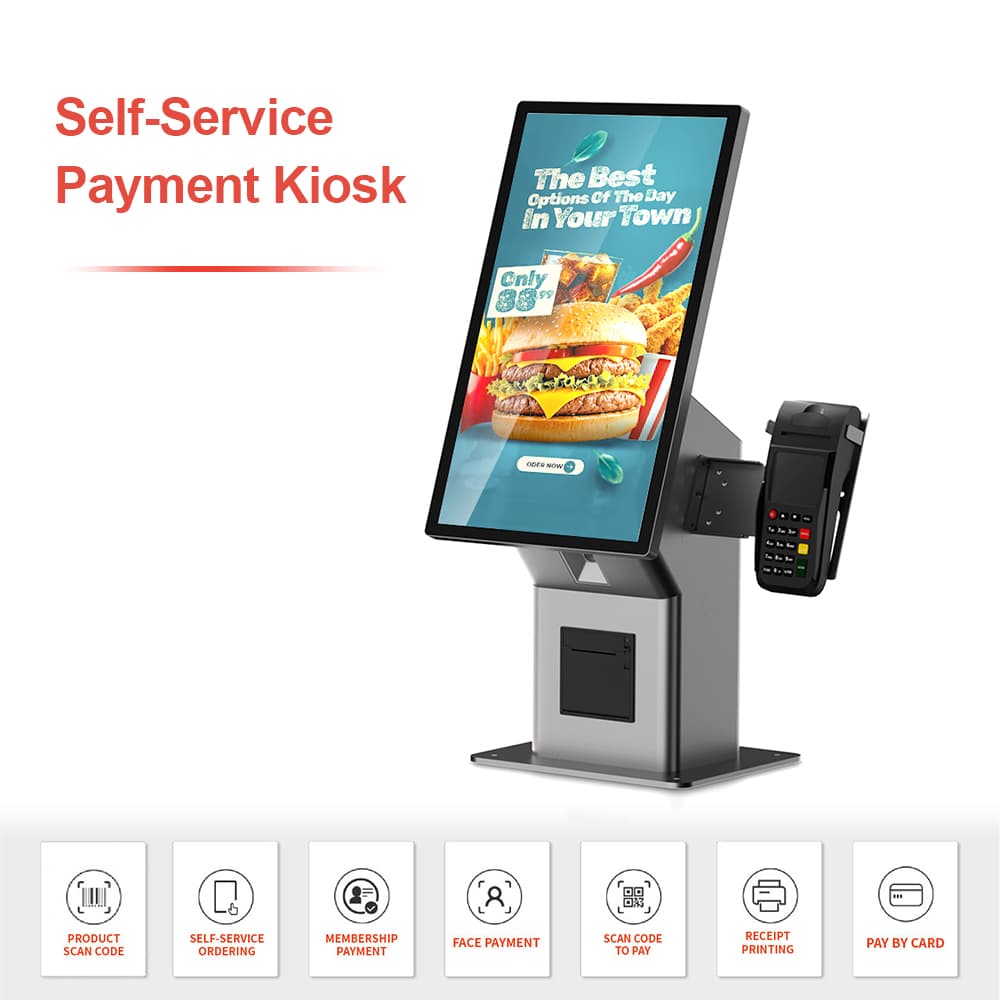
A. Credit/Debit Card Readers (EMV)
Modern kiosks must support EMV (Europay, Mastercard, and Visa) standards.
Contact Readers: Where the customer inserts the chip card.
Contactless Readers (NFC): Essential for mobile wallets like Apple Pay, Google Pay, and "Tap-to-Pay" credit cards. This is currently the fastest-growing payment method in autonomous retail.
B. QR Code & Barcode Scanners
Scanners are vital for digital wallets (e.g., Alipay, WeChat Pay) and loyalty program integration. High-performance CMOS scanners are required to read codes from glossy smartphone screens under various lighting conditions.
C. Cash Management (Optional but Critical)
In many regions, cash is still king. This requires:
Bill Acceptors: Validating and stacking paper currency.
Bill Recyclers: The ability to provide change in paper currency, significantly reducing the frequency of manual cash restocking.
D. Receipt Printers
High-speed thermal printers (typically 80mm) with "auto-cut" functionality provide physical proof of transaction, which is still a legal requirement in many jurisdictions.
Software Integration & Payment Gateways
Hardware is only as good as the software that drives it. To process a transaction, the kiosk must communicate with a Payment Gateway.
The Integration Layer
Operators must choose between two primary integration paths:
Semi-Integrated Solutions: The kiosk software sends the transaction amount to the payment terminal, which handles the sensitive card data independently. This drastically reduces the scope of PCI DSS compliance for the kiosk operator.
Fully Integrated Solutions: The kiosk application handles all data. This offers a more seamless UI but requires rigorous security certifications and audits.
Security & Compliance: Protecting the Transaction
When handling money in an unmanned environment, security is the top priority.
PCI DSS Compliance
The Payment Card Industry Data Security Standard (PCI DSS) is mandatory. Kiosks must utilize P2PE (Point-to-Point Encryption). This ensures that card data is encrypted the moment it is swiped or tapped and remains encrypted until it reaches the secure decryption environment of the processor.
Physical Security & Anti-Skimming
Public kiosks are targets for "skimmers." Modern kiosk payment modules feature:
Tamper-Responsive Sensors: If the enclosure is opened, the encryption keys are automatically wiped.
Encrypted PIN Pads (EPP): Ensuring that even if the hardware is compromised, the PIN remains unreadable.
Global Trends in Kiosk Payments
The landscape of unmanned payments is shifting toward a "contactless-first" philosophy.
Biometric Payments: Facial recognition payments (Face Pay) are gaining traction in Asia and are slowly entering European and US markets for high-security or VIP membership applications.
Cryptocurrency Integration: High-end kiosks are beginning to integrate Bitcoin and stablecoin payment options via Lightning Network QR codes.
AI-Driven Upselling: Payment kiosks are now using AI to analyze baskets at the moment of payment to suggest "last-minute" add-ons, increasing the Average Order Value (AOV).
Business Impact: Why Invest in Advanced Payment Kiosks?
The ROI of a high-quality payment kiosk is realized through three main channels:
Labor Redistribution: Moving staff from "order-takers" to "service-providers."
Increased Accuracy: Eliminating human error in order entry and change-making.
Queue Busting: Reducing the "perceived wait time" for customers, leading to higher customer satisfaction scores.
Choosing the Right Partner: The KosinTec Advantage
As a premier Kiosk Manufacturer, KosinTec does not just provide an enclosure; we provide a certified payment ecosystem.
Deep Integration: Our kiosks are pre-configured for global payment leaders like Nayax, ensuring your machine is ready for global deployment from Day 1.
Industrial Durability: Our payment modules are housed in cold-rolled steel with reinforced locking mechanisms.
Customization: Whether you need a simple NFC-only wall mount or a complex cash-recycling totem, our engineering team provides full OEM/ODM support.
FAQ: Frequently Asked Questions
What is the most secure payment method for a public kiosk?
NFC (Contactless) is currently the most secure, as it utilizes tokenization, meaning the actual card number is never transmitted or stored.
How do I handle transaction failures at an unmanned kiosk?
Advanced kiosks utilize Real-time Remote Monitoring. If a printer jams or a card reader fails, the system sends an instant alert to the operator's dashboard via the Cloud CMS.
Can my kiosk support international currencies?
Yes. By using a multi-currency payment gateway and a universal bill acceptor, your kiosk can be configured to accept over 100 different currencies and global credit card brands.
Conclusion: The Future is Frictionless
The goal of any kiosk payment system is to become invisible—to allow the customer to complete their goal with zero friction. By focusing on security, speed, and versatility, businesses can transform their physical locations into efficient, 24/7 revenue-generating hubs.
Contact KosinTec today to receive a technical consultation on integrating the perfect payment solution for your next kiosk project.

Address: Mingrenju Industrial Park, 10 Of Maotian Rd., Kengzi St., Shenzhen, Guangdong, China
- Tel:+86 18665965126
- Email: sales001@kosintec.com
- Worktime:8:00-02:00
- Contact Person:Ms. Cherry Lee
- Mobile Site