Hot Products
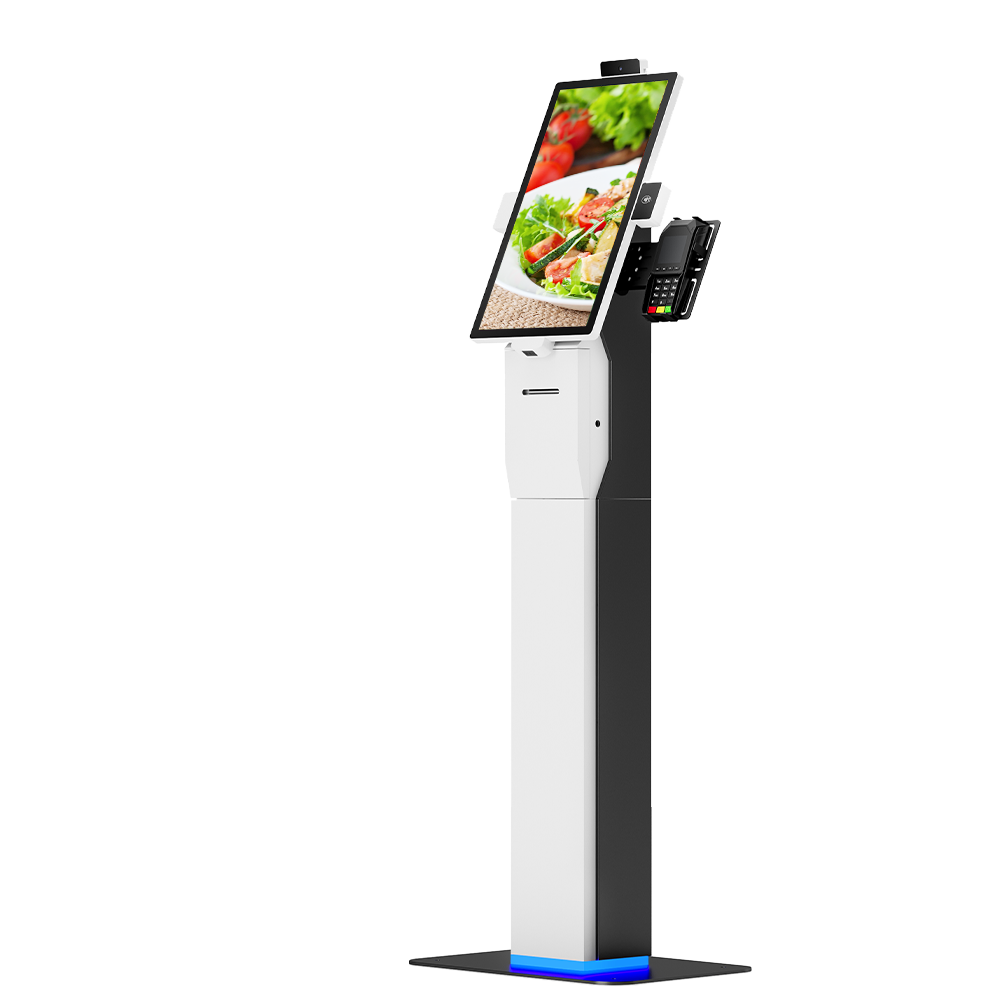
Branded Custom Self Order Kiosk With SDK & Pre-Install Service
This customizable self-service kiosk supports full brand customization including logo printing, custom colors and structural shape modification. It offers FHD or optional 4K high-definition display, configurable Intel i3/i5/i7 CPU with maximum 16GB RAM for smooth running of complex programs. Equipped with complete SDK for personalized UI development and system docking. We provide professional pre-installation, software configuration and full testing service, so the kiosk can be put into use directly after delivery.
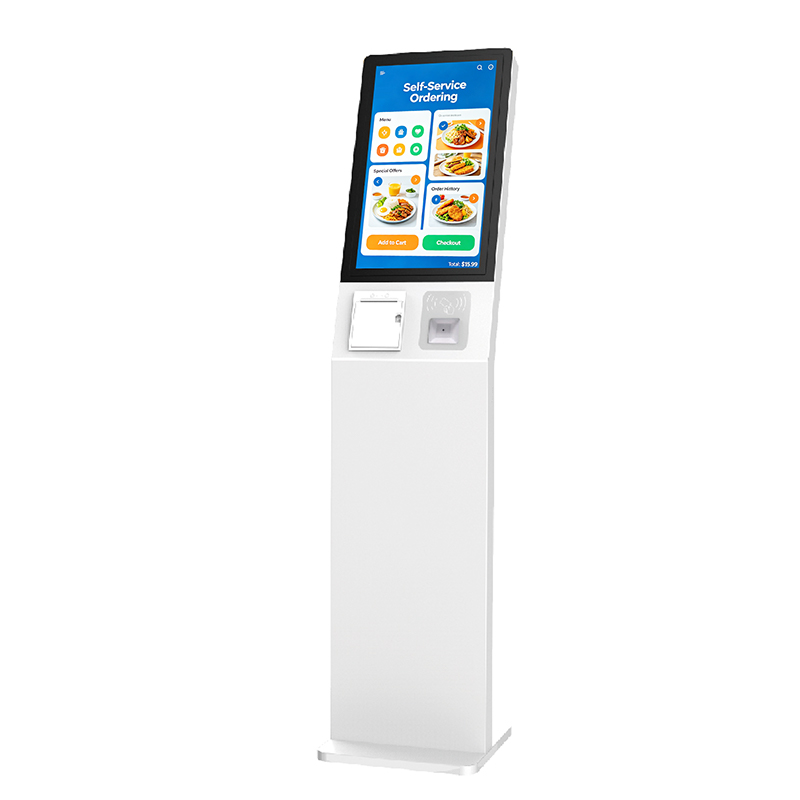
Fast Restaurant Ordering Desktop Touch Kiosk
Accelerate Service & Reduce QueuesEnables multiple customers to order simultaneously, drastically cuttingwait times during peak hours and improving overall cust
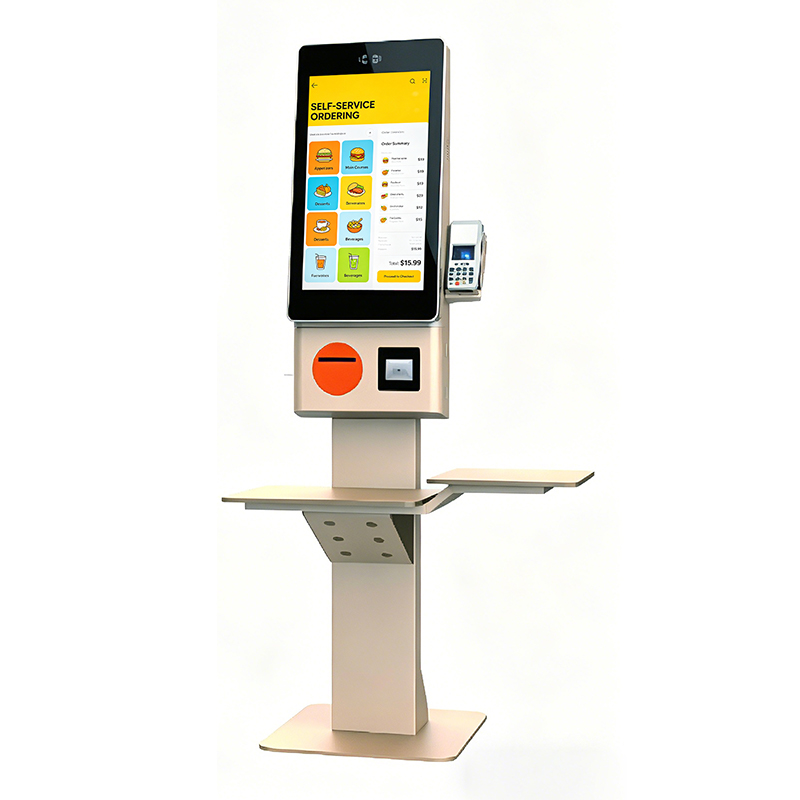
Self-Service-Ordering-Touch-All-in-One Kiosk
Secure & Versatile Payment HubIntegrates seamlessly with various payment gateways, supporting NFC,QR code, credit card readers, and mobile wallets for a complet
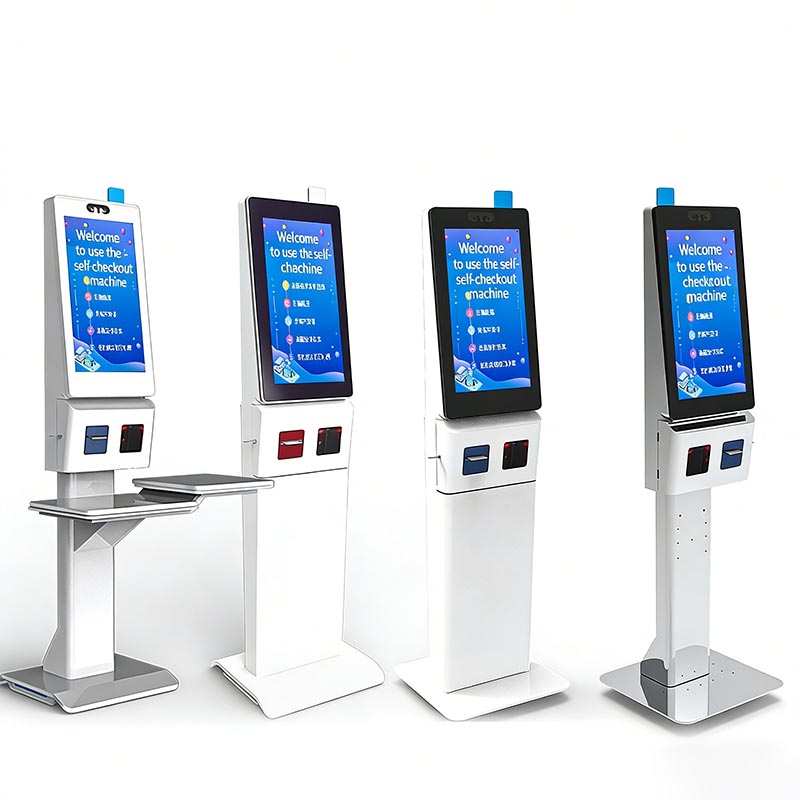
Self-Service Checkout Kiosk: HD Capacitive Screen, Multi-Payment (Face/QR) & Cloud Data Sync for Retail/F&B Operational Efficiency
Product IntroductionThis self-service checkout kiosk features an HD capacitive touch screen, integrated face/QR payment, and cloud data sharing. It supports sel
- Request A Quote
Self Ordering Kiosk Hardware
Publish time:2025-12-07 11:11:49
Detailed Product Description
In-Depth Analysis: Self Ordering Kiosk Hardware Components
The performance and longevity of a Self Ordering Kiosk are determined by the quality and configuration of its core hardware. Below is a detailed analysis of each component and critical differences in the market.
I. Core Processing Unit (CPU/OS)
| Component | Function | Market Comparison & KosinTec Recommendation |
| Mainboard / CPU | Executes the ordering application and manages peripheral communication. Determines system speed and complexity handling. | Android (e.g., RK3568): Lower cost, simpler maintenance, ideal for cloud-based apps. Windows (e.g., i5 4200M): Higher cost, necessary for legacy/complex POS systems. Recommendation: Use Android unless proprietary software absolutely requires Windows. |
| RAM / Storage | Provides the memory (RAM) and space (Storage) to run the operating system and store data/logs. | Commercial use requires a minimum of 4GB RAM and 64GB eMMC/SSD storage to ensure applications run smoothly without crashes, especially when logging peak transactions. |
II. Display and Interaction Modules
The display is the customer's primary interface; quality directly impacts user experience.
| Component | Function | Market Comparison & KosinTec Recommendation |
| Panel Type | Provides visual output (menu display). Quality affects color, brightness, and lifespan. | IPS A-Grade (KosinTec Standard): Superior color accuracy, wide viewing angles, high brightness (300 cd/m2), and commercial lifespan. B-Grade/Consumer Grade: Cheaper, prone to burnout/darkening with 24/7 use. Recommendation: Always demand A-Grade IPS to ensure low TCO. |
| Touch Sensor | Registers customer input and transmits coordinates to the OS. | P-CAP (Projected Capacitive): Highly durable, multi-touch capable (10-point), excellent clarity, and fast response (<= 6 ms). Infrared (IR): Cheaper, less precise, sensitive to dust/scratches, slower response. Recommendation: P-CAP (G+G structure) is essential for a professional Self Ordering Kiosk. |
| Protective Cover | Shields the panel and touch sensor from physical damage and smudges. | AG/AF Tempered Glass: Anti-Glare (AG) reduces reflections; Anti-Fingerprint (AF) keeps the screen clean. Recommendation: AG/AF Tempered Glass is critical for visibility and reducing cleaning frequency in restaurants. |
 |
III. Transactional Peripherals
These components are crucial for eliminating transaction bottlenecks and customer queues.
| Component | Function | Market Comparison & KosinTec Recommendation |
| Thermal Printer | Prints order receipts or queue tickets. Speed is critical. | Max 180 mm/s: Industry standard for fast service. Slow Printers (e.g., 60-100 mm/s): Creates customer queues at the kiosk itself. Recommendation: Minimum speed of 180 mm/s is required for QSR environments. |
| Payment Module | Processes card, mobile, and digital wallet payments. | NFC/Mifare (Contactless): Required for tap-to-pay (Apple Pay, credit cards). 1D/2D Scanner: Required for QR code payments (Alipay, WeChat). Recommendation: A combined, integrated module (NFC + Scanner) offers maximum flexibility and speed. |
IV. Structure and Build Quality
| Component | Function | Market Comparison & KosinTec Recommendation |
| Chassis Material | Provides the physical frame and protects internal electronics. | Metal (Sheet Metal/Aluminum Alloy): High durability, vandal resistance, superior heat dissipation, better grounding. Plastic: Cheaper, prone to damage, poor heat control. Recommendation: Metal construction is non-negotiable for commercial/public deployment. |
| Environmental Rating | Specifies operational temperature and humidity tolerance. | Commercial Grade (0°C - 55°C): Necessary for heat generated near kitchens or enclosed spaces. Recommendation: Verify this specification to guarantee stable operation and minimize thermal shutdowns. |
V. Configuration Recommendations
| Use Case | Recommended OS/CPU | Key Hardware Configuration |
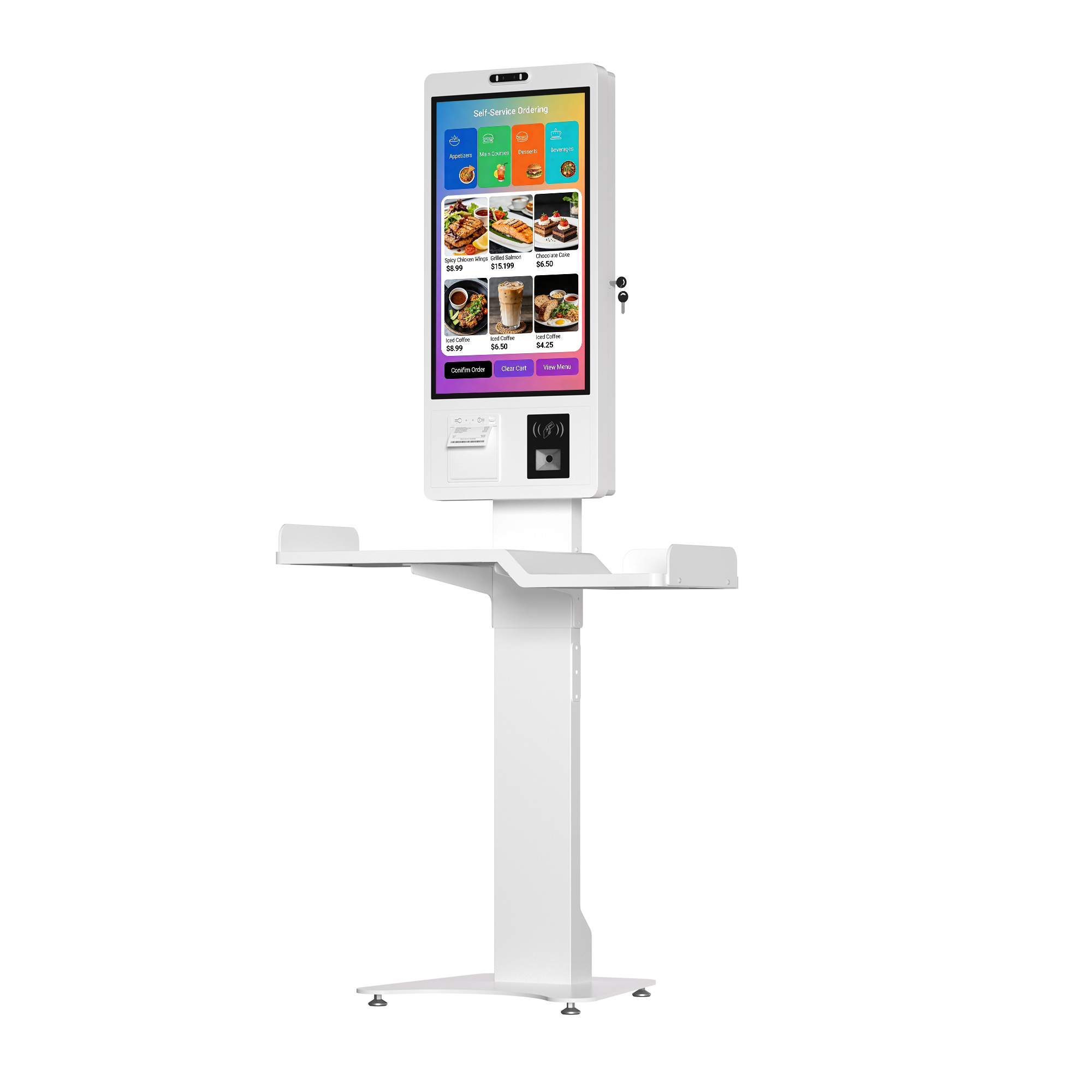
| High Traffic QSR | Windows (i5) or Android (RK3568) | Vertical 32-inch, Max 180 mm/s Printer, P-CAP touch. |
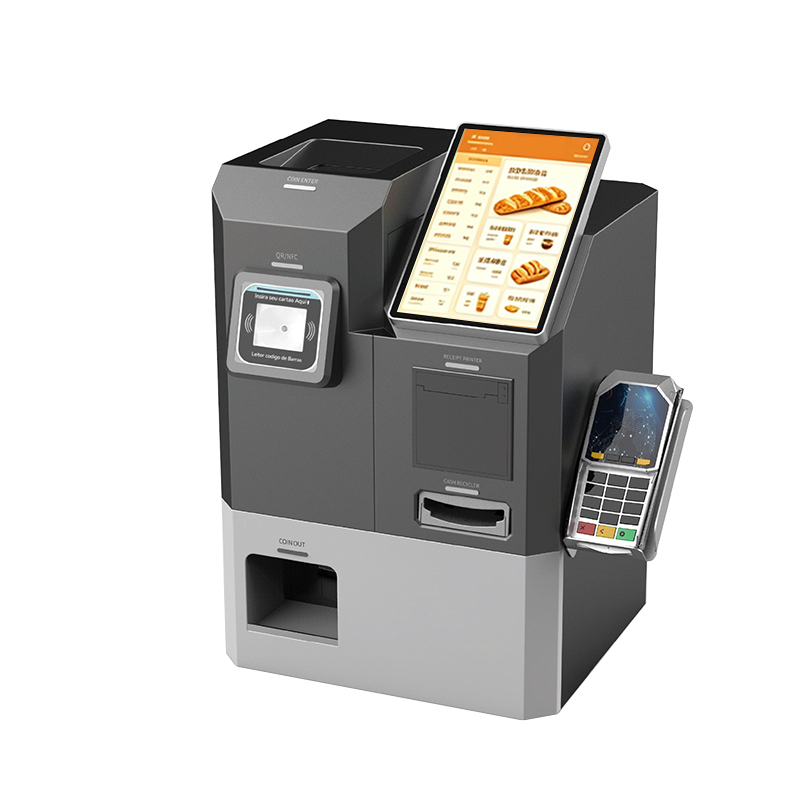
| Simple Menu Cafe | Android (RK3568) | Desktop 21.5-inch, standard NFC/QR integration. |
| Retail/Ticketing | Windows (i5) | Wall-Mounted, requiring additional ports for proprietary scanners/peripherals. |
How to choose the right self ordering kiosk hardware
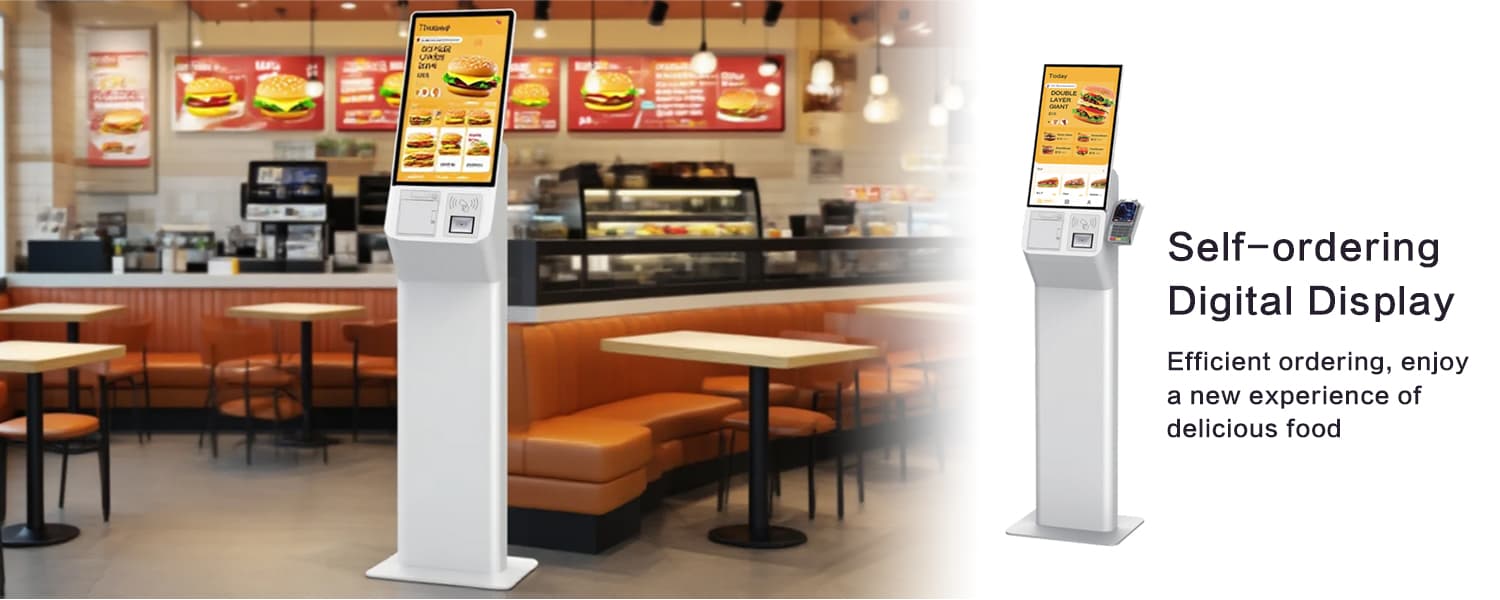
Choosing the right Self Ordering Kiosk hardware configuration depends entirely on your operational needs and environment. For high-traffic QSRs, select the 32-inch Vertical Kiosk powered by the reliable Windows i5 platform, ensuring maximum throughput with the Max 180 mm/s printer and fast NFC/QR payment modules. If you operate a simple menu cafe or small retail location, the smaller 21.5-inch Android RK3568 Desktop Kiosk provides an ideal, cost-effective solution with fast P-CAP touch response. Always prioritize integrated NFC/QR payment and commercial-grade durability (IPS A-Grade) regardless of the size, as these features dictate customer satisfaction and long-term TCO. Don't risk your ROI with incompatible systems or low-quality components. Contact KosinTec today for expert consultation and let us design the perfect, TCO-optimized Self Ordering Kiosk solution for your specific business case.
Address: Mingrenju Industrial Park, 10 Of Maotian Rd., Kengzi St., Shenzhen, Guangdong, China
- Tel:+86 18665965126
- Email: sales001@kosintec.com
- Worktime:8:00-02:00
- Contact Person:Ms. Cherry Lee
- Mobile Site